Master Video Comprehension Techniques for Quick Insights

More than half of american students now rely on video content for research and learning. The sheer volume of resources available today can make it tough to separate useful material from digital noise. Whether you are an academic, a professional, or a curious learner, knowing how to efficiently comprehend videos can completely change your study habits. This guide uncovers proven steps and tools so you can extract deeper insights and retain knowledge from every video you watch.
Table of Contents
- Step 1: Set Up Your Video Comprehension Tools
- Step 2: Select and Prepare Relevant Video Content
- Step 3: Apply Active Listening and Note-Taking Strategies
- Step 4: Summarize Key Points Using AI Tools
- Step 5: Verify and Refine Your Video Insights
Quick Summary
| Key Point | Explanation |
|---|---|
| 1. Choose Effective Video Tools | Select user-friendly tools like ELAN and VDA to enhance video analysis and comprehension. Choose tools that integrate smoothly with your workflow. |
| 2. Curate Quality Video Content | Prioritize credible videos that align with learning goals. Use systematic criteria for selecting videos to ensure depth and clarity. |
| 3. Implement Active Listening Techniques | Practice active listening and structured note-taking to engage fully with video content, significantly enhancing retention and comprehension. |
| 4. Leverage AI for Summarization | Utilize AI tools like NarrationBot and InfoBot to create concise summaries, helping to distill complex information quickly and efficiently. |
| 5. Verify Insights Through Cross-Referencing | Validate your gathered insights by comparing them with research papers or credible sources to ensure a comprehensive and accurate understanding. |
Step 1: Set Up Your Video Comprehension Tools
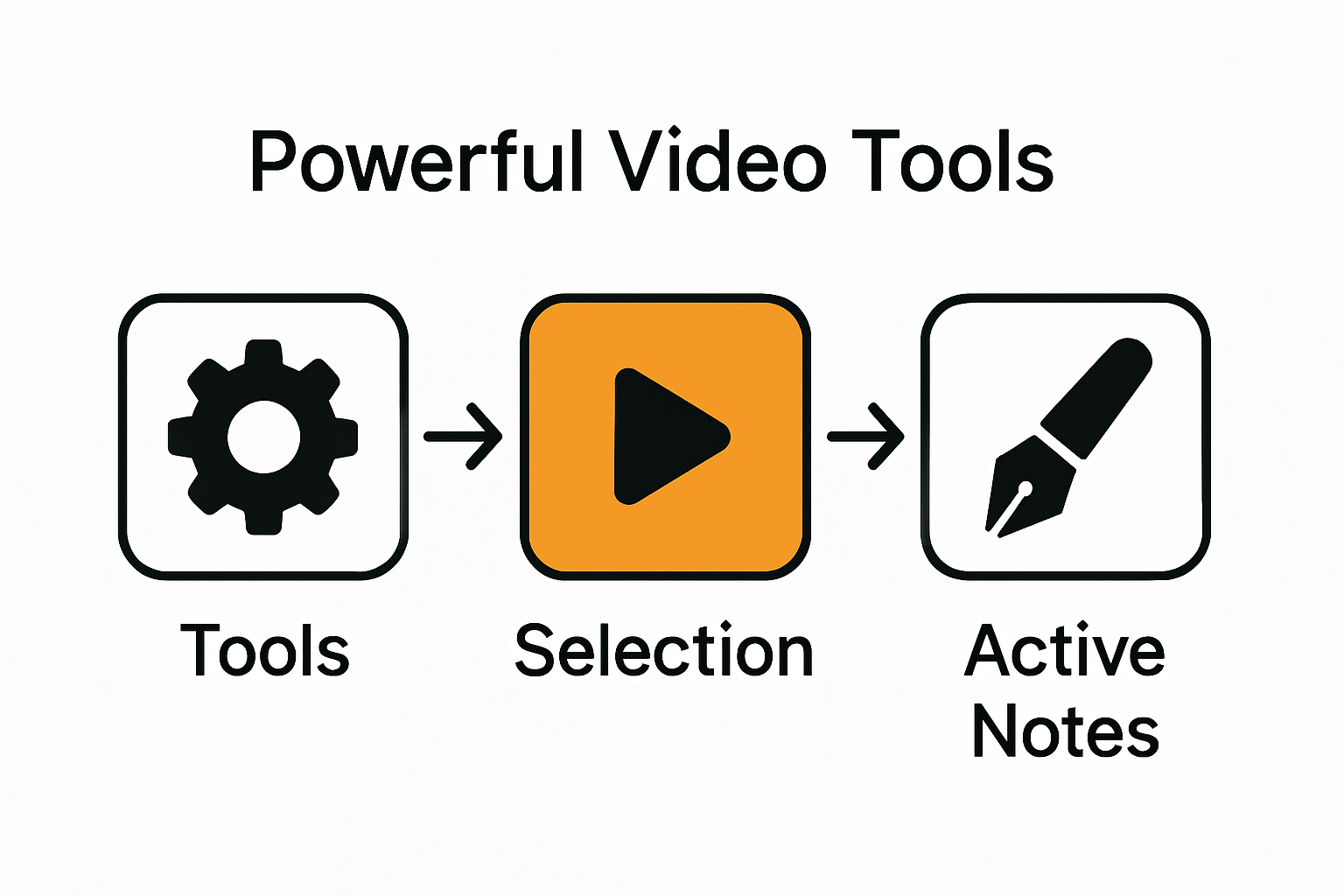
Preparing your digital workspace is crucial for efficient video learning. In this step, you will select and configure tools that transform how you process and understand video content, making your research and learning significantly more effective.
Start by exploring specialized software designed for video analysis. ELAN represents an excellent professional tool for annotating and transcribing video recordings, particularly useful for academic and research purposes. This software allows you to break down complex video content into manageable segments, marking specific moments, themes, and insights.
Beyond annotation tools, consider Video Data Analysis (VDA) techniques that help you systematically study video content. These methodologies provide structured approaches to extracting meaningful information from lectures, interviews, tutorials, and other video resources. Key tools in this process might include screen capture software, note taking applications, and browser extensions that support timestamped note recording.
Pro tip: Choose tools that integrate smoothly with your existing workflow. The goal is to enhance your learning, not create additional complexity. Look for solutions with intuitive interfaces, quick learning curves, and compatibility with multiple video platforms.
As you set up your tools, remember that technology is just an enabler. Your critical thinking and active engagement remain the most important components of effective video comprehension. In the next step, we will explore specific strategies for actively engaging with video content.
Step 2: Select and Prepare Relevant Video Content
This crucial step involves identifying and curating video content that aligns precisely with your learning objectives. Strategic selection will determine the quality and effectiveness of your comprehension process.
When choosing videos, prioritize content from credible sources that offer depth and clarity. Innovative research tools like Papeos demonstrate how integrating research papers with corresponding talk videos can enhance learning experiences. This approach allows you to cross reference visual presentations with written materials, creating a more comprehensive understanding.
Advanced tools such as CoKnowledge provide additional support by offering time synchronized knowledge graphs and video abstracts. These features help you quickly assess a video’s relevance and potential learning value before investing significant time in watching the entire content.
Pro tip: Develop a systematic approach to video selection. Create a preliminary screening process that evaluates videos based on specific criteria such as speaker credentials, content depth, recency of information, and alignment with your learning goals. Understand video content analysis techniques to refine your selection strategy.
Remember that quality trumps quantity. One well-selected video with rich insights is more valuable than multiple mediocre ones.

In the next step, we will explore active watching techniques that will help you extract maximum knowledge from your chosen videos.
Step 3: Apply Active Listening and Note-Taking Strategies
Mastering active listening and note-taking techniques will transform how you absorb and retain information from video content. This step focuses on developing intentional strategies that maximize your comprehension and learning efficiency.
According to Valdosta University, effective active listening involves maintaining focus, recognizing non verbal cues, and implementing structured note-taking methods. These techniques help you move beyond passive watching to actively engaging with the content.
One powerful approach is the Cornell Notes system, which divides your note-taking page into specific sections for cues, notes, and summaries. This structured method dramatically improves information retention by creating a clear framework for capturing and reviewing key insights. When watching videos, pause periodically to record main ideas, potential questions, and critical takeaways in these dedicated sections.
Pro tip: Learn advanced note-taking strategies that go beyond traditional methods. Experiment with digital tools, color coding, and mind mapping techniques to make your notes more dynamic and memorable.
Remember that active listening is a skill that improves with practice. Stay curious, ask mental questions while watching, and challenge yourself to extract meaningful insights.
In the next step, we will explore how to review and synthesize your notes for maximum learning impact.
Step 4: Summarize Key Points Using AI Tools
AI technologies are revolutionizing how we extract and process information from video content. This step will guide you through leveraging cutting edge artificial intelligence tools to generate precise and insightful video summaries.
Research from recent studies highlights innovative AI solutions like NarrationBot and InfoBot, which automatically generate comprehensive video descriptions and answer specific user queries. These tools can transform complex video content into digestible insights, making comprehension faster and more efficient.
Additionally, CoKnowledge demonstrates advanced AI capabilities by filtering and classifying time synchronized comments in educational videos. This technology creates knowledge graphs and video abstracts that help viewers quickly understand key points without watching entire presentations. When selecting an AI summarization tool, look for features that provide contextual understanding rather than just extracting random sentences.
Pro tip: Explore the most effective AI summarization tools that offer nuanced understanding beyond simple text extraction. Experiment with different platforms to find the one that best matches your learning style and content requirements.
Remember that AI tools are assistants, not replacements for critical thinking. Always review and validate the generated summaries against your original notes and understanding. In the next step, we will discuss how to critically analyze and integrate these AI generated insights into your broader learning strategy.
Step 5: Verify and Refine Your Video Insights
The final phase of video comprehension involves critically examining and polishing the insights you have gathered. This crucial step transforms raw information into refined, actionable knowledge that you can confidently apply in your work or studies.
Innovative research platforms like Papeos demonstrate powerful cross referencing techniques that allow you to validate video insights by comparing them with corresponding research papers. This approach enables you to triangulate information across different mediums, ensuring a more comprehensive and accurate understanding of the content.
CoKnowledge offers another sophisticated method for insight verification by filtering and clustering time synchronized comments in educational videos. This technology helps you identify patterns, alternative perspectives, and potential gaps in your initial comprehension, making your insight refinement process more robust and nuanced.
Pro tip: Learn advanced video content analysis techniques that go beyond surface level understanding. Develop a systematic approach to cross checking information, consulting multiple sources, and challenging your initial interpretations.
Remember that true comprehension is an iterative process. Treat your first draft of insights as a starting point, not a final destination. Be willing to revise, question, and deepen your understanding continually. The most powerful learners are those who remain curious and open to refining their knowledge.
Unlock Faster Video Comprehension with SummYT
Mastering video comprehension techniques demands not only skillful listening and smart note-taking but also efficient tools to handle vast video content. If you find yourself overwhelmed by long lectures, webinars, or interviews when all you need are the key insights the article calls precise summaries and active engagement can become exhausting and time-consuming. You want to save time, avoid information overload, and get clear, concise knowledge quickly.
SummYT is designed exactly for these challenges SummYT is an AI-powered YouTube summarizer that transforms lengthy videos into easy-to-digest summaries and key points. Whether you are a student aiming to grasp complex academic videos swiftly or a professional needing to stay updated with webinars without watching hours of footage SummYT fits your needs perfectly. With features like unlimited summaries, multilingual support, and one-click browser extensions SummYT accelerates your learning by helping you skip the fluff and focus on what truly matters.
Take control of your video learning journey now
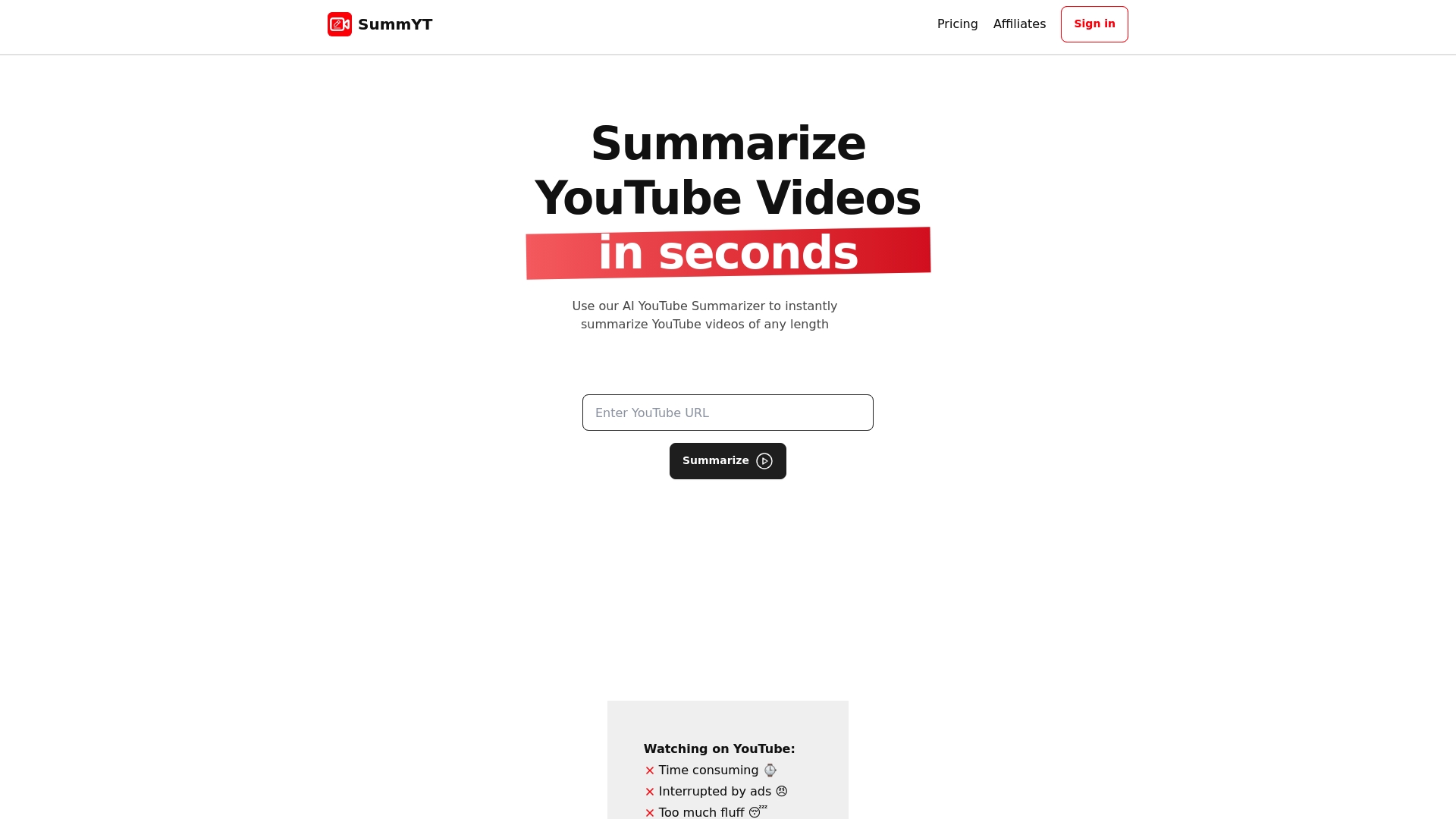
Explore how SummYT can revolutionize your study and research habits at https://summyt.app. Combine it with the practical strategies from this article and you will never waste time watching videos without purpose again. Start creating your personalized summaries today with SummYT and move from passive watching to active understanding in minutes.
Frequently Asked Questions
How can I set up tools for video comprehension effectively?
To set up tools for video comprehension, focus on selecting software that allows for annotating and analyzing video content, such as transcription or screen capture tools. Start by exploring user-friendly applications that fit your workflow to improve your learning efficiency within the first few days.
What criteria should I use to select relevant video content?
When selecting video content, prioritize sources that are credible and provide clear, in-depth material. Create a checklist based on speaker credentials, the depth of content, and how well it aligns with your learning objectives.
What are effective note-taking strategies for video comprehension?
Effective note-taking strategies include using structured methods like the Cornell Notes system, which encourages capturing main ideas and key points in an organized manner. Practice this technique during your next video session to improve retention by around 30%.
How can I use AI tools to summarize video insights?
You can use AI tools that generate comprehensive summaries and respond to specific queries regarding videos. Experiment with different AI platforms and review their summaries alongside your notes to enhance your understanding of key concepts within a few hours.
What steps should I take to verify the insights I gather from videos?
To verify insights, cross-reference the information from videos with related research materials or credible sources. Develop a systematic process to check for consistent patterns or gaps in understanding, allowing for deeper comprehension over the course of your learning process.
How can I continuously refine my video comprehension skills?
Continuously refine your video comprehension skills by revisiting notes, engaging with new content, and seeking diverse perspectives. Challenge yourself to refine your insights every few weeks to stay adaptable and deepen your understanding incrementally.