YouTube Content Review Process: What Really Happens

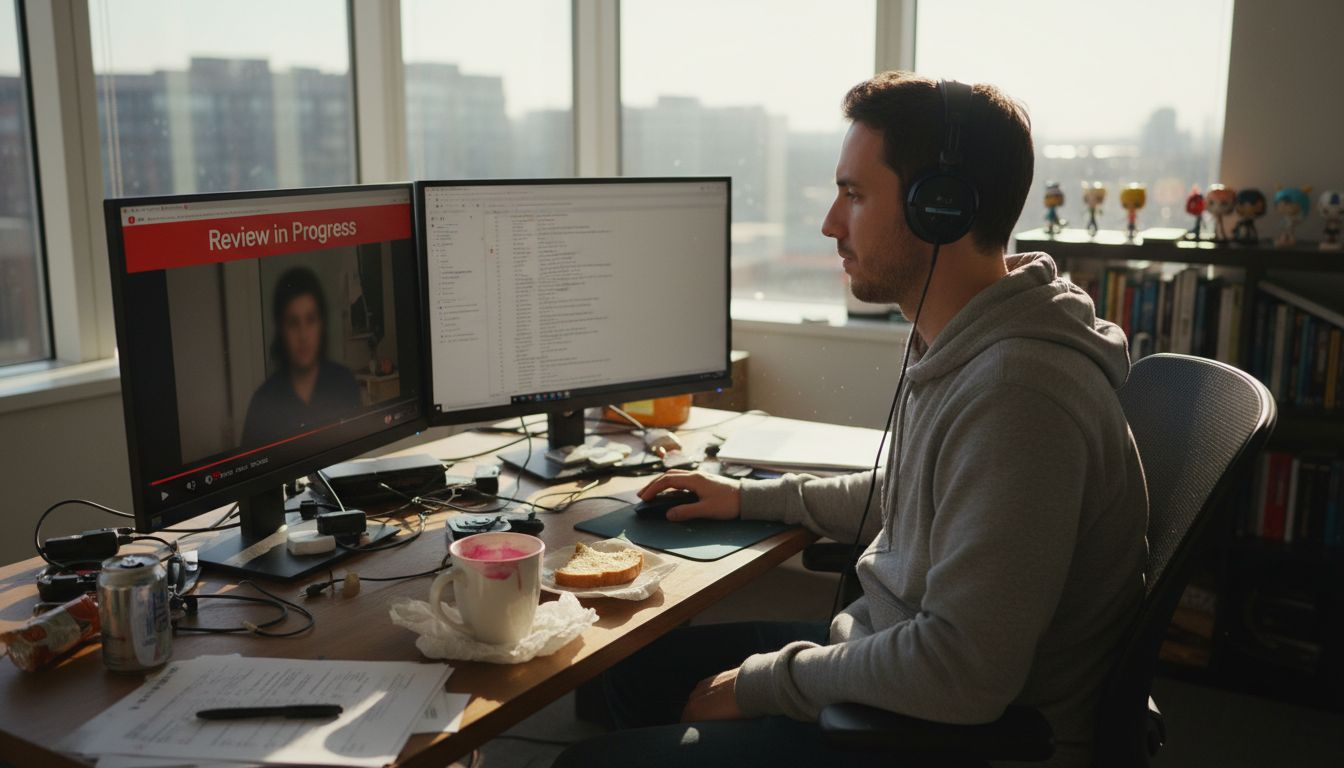
Over 500 hours of video are uploaded to YouTube every single minute, making the platform a powerful force in the daily lives of millions, including every American user. Understanding how YouTube flags and reviews content is more important than ever as creators navigate a system built to protect viewers while supporting freedom of expression. This guide uncovers the step-by-step process behind automated detection, human moderation, and appeals so you can create confidently and avoid costly mistakes.
Table of Contents
- How YouTube Flags And Reviews
- Roles Of AI And Human Reviewers
- Copyright Dispute And Content ID Appeals
- Community Guidelines Strikes And Appeals
- Policy Exceptions And Public Interest Handling
Key Takeaways
| Point | Details |
|---|---|
| YouTube’s Content Review Process | Combines automated technology with human oversight to effectively identify and review flagged content. |
| Role of AI and Human Reviewers | AI serves as the first layer for detection, while human reviewers provide nuanced understanding and final assessments. |
| Copyright Dispute Process | Streamlined to enhance efficiency, the Content ID system helps protect copyright holders but poses challenges for creators using fair use. |
| Community Guidelines Enforcement | Strikes serve as warnings, and creators can appeal to contest strikes with detailed explanations of their flagged content. |
How YouTube Flags And Reviews
YouTube has a sophisticated multi-layered system for identifying and reviewing potentially problematic content, combining automated technologies with human oversight. Machine learning algorithms help detect violations before human reviewers make final determinations about specific videos.
The content review process typically follows several key stages. First, user reports trigger an initial review, where community members can flag videos they believe violate platform guidelines. These flags cover various categories including sexual content, spam, harassment, and hate speech. In the last quarter of 2017, sexual content represented 30% of human-generated flags, while spam comprised 26.4% of reported issues.
Once a video receives multiple flags, YouTube’s trained content moderation team investigates. Their process involves carefully examining the flagged content against community guidelines, assessing context, intent, and potential violations. Advanced machine learning systems support human reviewers by pre-screening potentially problematic content, helping them focus on nuanced cases that require deeper human judgment.
The platform continually works to improve its review mechanisms, with plans to expand its content review team to 10,000 members. This investment demonstrates YouTube’s commitment to maintaining a safe, respectful online environment while balancing free expression with responsible content moderation.
Pro User Tip: Always review YouTube’s community guidelines thoroughly before uploading content to understand potential flag triggers and avoid unintentional violations.
Roles Of AI And Human Reviewers
YouTube’s content review process represents a complex collaboration between artificial intelligence and human expertise, creating a multi-layered system of content moderation. Advanced recommendation algorithms can inadvertently guide users toward increasingly polarized content, highlighting the critical need for human oversight and intervention.

Artificial intelligence plays a pivotal role in initial content screening, using machine learning algorithms to rapidly identify potential policy violations, inappropriate material, and unusual viewing patterns. These AI systems can process thousands of videos per minute, flagging content that appears to breach community guidelines. However, AI is not infallible and cannot always understand nuanced context, which is where human reviewers become essential.
Human reviewers serve as the critical second layer of content assessment, bringing contextual understanding, cultural awareness, and nuanced judgment that AI systems currently cannot replicate. Research demonstrates that human interaction can effectively burst algorithmic information bubbles, showing how critical human judgment remains in content moderation. These trained professionals carefully evaluate flagged content, assessing intent, cultural context, and potential subtle violations that automated systems might miss.
The symbiotic relationship between AI and human reviewers continues to evolve, with technological advancements expanding the capabilities of machine learning while maintaining the irreplaceable role of human critical thinking. This balanced approach allows YouTube to manage its massive content ecosystem more effectively, protecting user experiences while preserving freedom of expression.
Here’s a summary of the key roles of AI and human reviewers within YouTube’s content moderation system:
| Role | Artificial Intelligence | Human Reviewer |
|---|---|---|
| Detection Speed | Processes thousands of videos/min | Reviews escalated, nuanced cases |
| Judgment Depth | Lacks contextual understanding | Brings cultural and contextual nuance |
| Error Potential | Misses subtle/contextual violations | May interpret subjective violations |
| Main Responsibility | Initial screening and flagging | Final decision on complex content |
Pro Content Moderator Tip: Always maintain a balanced perspective when reviewing content, recognizing both the strengths of AI technology and the irreplaceable nuance of human judgment.
Copyright Dispute And Content ID Appeals
YouTube’s Content ID system is a complex mechanism designed to protect copyright holders while navigating the intricate landscape of digital content creation. In July 2022, YouTube significantly streamlined its appeal process by reducing dispute resolution time from 30 days to just 7 days, introducing an ‘Escalate to Appeal’ option that allows creators to bypass initial dispute steps for blocked videos.
The Content ID system operates through automated scanning that compares uploaded videos against a massive database of copyrighted material. When potential copyright infringement is detected, the system can automatically monetize the video for the copyright holder, block the content, or mute specific audio tracks. This automated approach, while intended to protect intellectual property, often creates challenges for content creators who may be using material under fair use provisions.
The Electronic Frontier Foundation has critiqued the Content ID system for potentially discouraging fair use, highlighting how the system can inadvertently shift revenue from creators to rightsholders even in legitimate fair use scenarios. Creators facing copyright claims must navigate a complex appeals process that involves providing detailed documentation and explaining the context of their content use.
Successful copyright dispute resolution requires creators to understand their rights, document their use of potentially copyrighted material, and be prepared to provide comprehensive evidence supporting their claim of fair use or original content creation. The process demands patience, detailed documentation, and a clear understanding of copyright laws and platform guidelines.
Pro Creator Tip: Always maintain thorough documentation of your content creation process, including original sources, transformative uses, and clear explanations of how your work differs from the original copyrighted material.
Community Guidelines Strikes And Appeals
YouTube’s Community Guidelines represent a comprehensive framework for maintaining platform integrity, establishing clear boundaries for acceptable content and creator behavior. The system of strikes serves as a progressive disciplinary mechanism designed to protect users and maintain a safe online environment.
Community Guidelines Strikes function as a warning system with significant consequences for content creators. According to YouTube’s official guidelines, accumulating three strikes within a 90-day period can result in complete channel termination. Each strike typically comes with specific restrictions, such as temporary video upload limitations or removal of monetization privileges. The severity of the strike depends on the nature of the violation, ranging from minor infractions to serious policy breaches involving hate speech, harassment, or dangerous content.
The appeal process provides creators with an opportunity to contest strikes they believe were issued incorrectly. When a strike is received, creators can submit a detailed appeal explaining their perspective and providing context for the flagged content. YouTube’s review team, comprising both automated systems and human reviewers, carefully evaluates these appeals. Successful appeals can result in strike removal, helping creators maintain their channel’s standing and avoid potential long-term penalties.
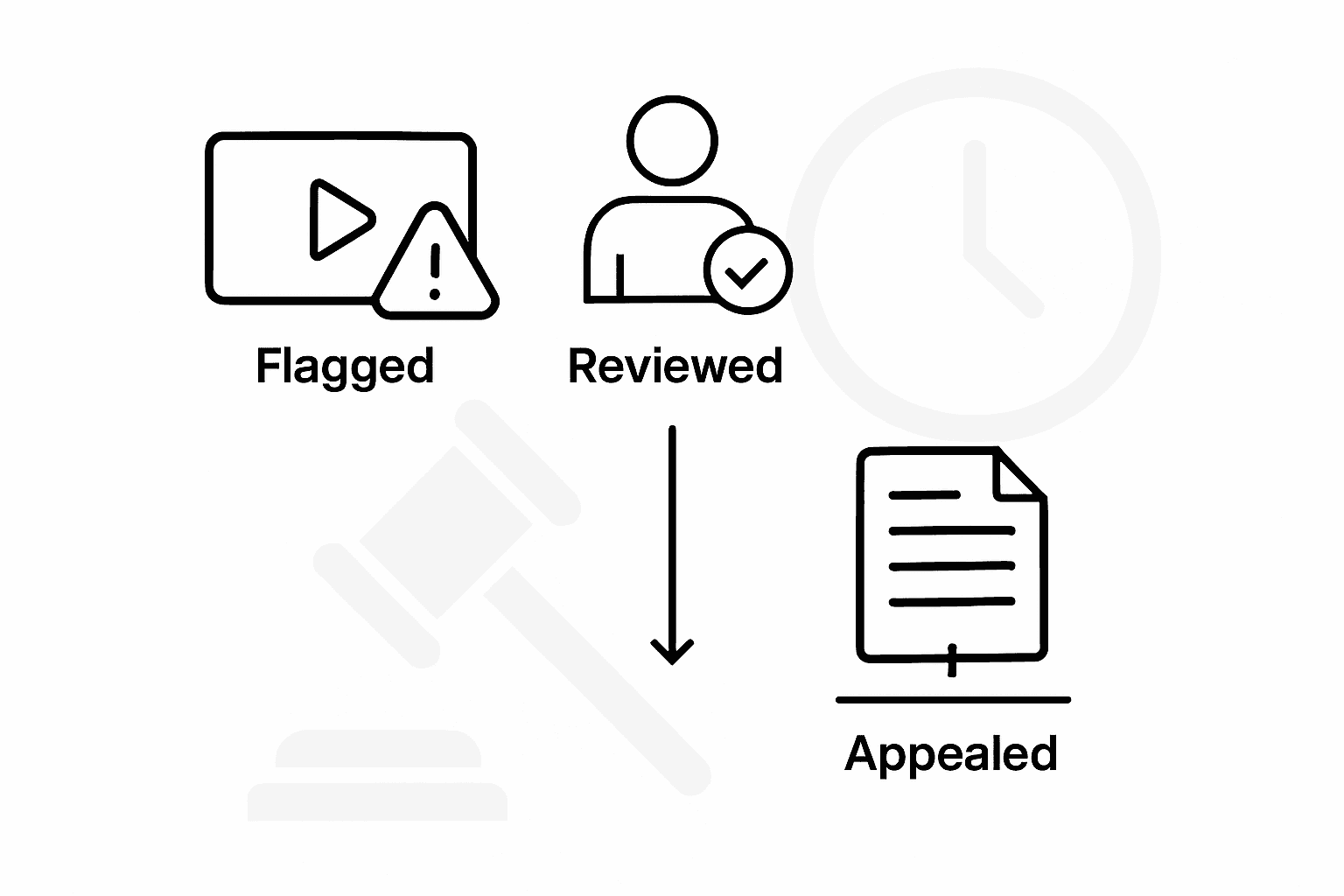
This table contrasts YouTube’s two primary content dispute processes:
| Dispute Type | Reason Triggered | Resolution Timeframe | Special Considerations |
|---|---|---|---|
| Content ID Appeal | Claimed copyright infringement | 7 days (since 2022) | Evidence of fair use often required |
| Community Strike Appeal | Alleged guideline violation | Varies (few days to weeks) | Context and intent are closely evaluated |
Navigating YouTube’s guidelines requires a proactive approach. Creators must stay informed about current policy updates, understand the nuanced interpretation of community standards, and consistently produce content that aligns with platform expectations. This involves regular self-review, understanding potential trigger points for violations, and maintaining a clear understanding of acceptable content boundaries.
Pro Content Strategy Tip: Regularly review YouTube’s community guidelines, document your content creation process, and maintain a clear record of your video production to effectively defend against potential strikes.
Policy Exceptions And Public Interest Handling
YouTube’s content policies are not absolute, with nuanced provisions designed to accommodate critical public interest scenarios that require careful contextual evaluation. Exceptional Content Handling represents a sophisticated approach to balancing platform guidelines with broader societal considerations, recognizing that some content may have significant educational, journalistic, or documentary value despite potential policy challenges.
Public interest exceptions typically emerge in several key categories, including documentary reporting, educational content, historical documentation, and legitimate journalistic investigations. These scenarios demand a more sophisticated review process that goes beyond standard algorithmic filtering. Content reviewers must carefully assess the intent, educational value, and potential social impact of material that might otherwise be flagged or removed under standard guidelines.
The evaluation of public interest content involves multiple layers of assessment. Reviewers consider factors such as the credibility of the source, the context of the content, its potential educational or informative value, and the broader societal implications of suppressing or allowing the material. This approach requires a nuanced understanding of complex social issues, media ethics, and the delicate balance between protecting users and preserving freedom of expression.
Navigating policy exceptions requires creators to provide comprehensive context, demonstrating the legitimate purpose and social value of potentially controversial content. This might involve detailed explanations, academic citations, journalistic credentials, or clear educational objectives that distinguish the content from purely inflammatory or harmful material.
Pro Content Strategy Tip: When creating potentially sensitive content, proactively document its educational or public interest value, providing clear context and credible sources to support your case for exceptional handling.
Unlock Faster Understanding of YouTube’s Content Review Insights
You just explored the detailed process behind YouTube’s content moderation challenges and the delicate balance between AI technology and human judgment. Staying informed on how content is flagged, reviewed, and appealed can be overwhelming, especially when you need to digest vast amounts of educational videos, webinars, or creator content quickly. SummYT tackles this challenge by enabling you to save valuable time with AI-powered YouTube summaries that give you crisp key insights without watching full videos.
Discover how SummYT can transform your video experience with features designed for students, professionals, content creators, and lifelong learners who want to avoid wasted time and distractions caused by excessive content moderation and policy complexity. Take control of your learning and research efficiency now by visiting SummYT’s official site and harness the power of summarized knowledge today. Don’t let complicated review processes slow you down – get straight to the content that matters.
Frequently Asked Questions
What is the YouTube content review process?
The YouTube content review process involves a combination of automated technologies and human oversight. Users can flag videos they believe violate community guidelines, prompting an investigation by YouTube’s content moderation team, which assesses the flags against established guidelines.
How does AI contribute to YouTube’s content review?
AI plays a crucial role in the initial screening of content by rapidly identifying potential policy violations and inappropriate material. It processes thousands of videos per minute but lacks the contextual understanding that human reviewers provide.
What happens if my video is flagged on YouTube?
If your video is flagged, YouTube’s content moderation team will review it based on the community guidelines. Depending on the violation’s nature, your video may be removed, receive a strike, or be upheld if it adheres to the guidelines.
How can I appeal a Community Guidelines strike on YouTube?
To appeal a Community Guidelines strike, you must submit a detailed appeal explaining your perspective and the context of your content. YouTube’s review team will evaluate your appeal, and successful ones can result in the removal of the strike.